
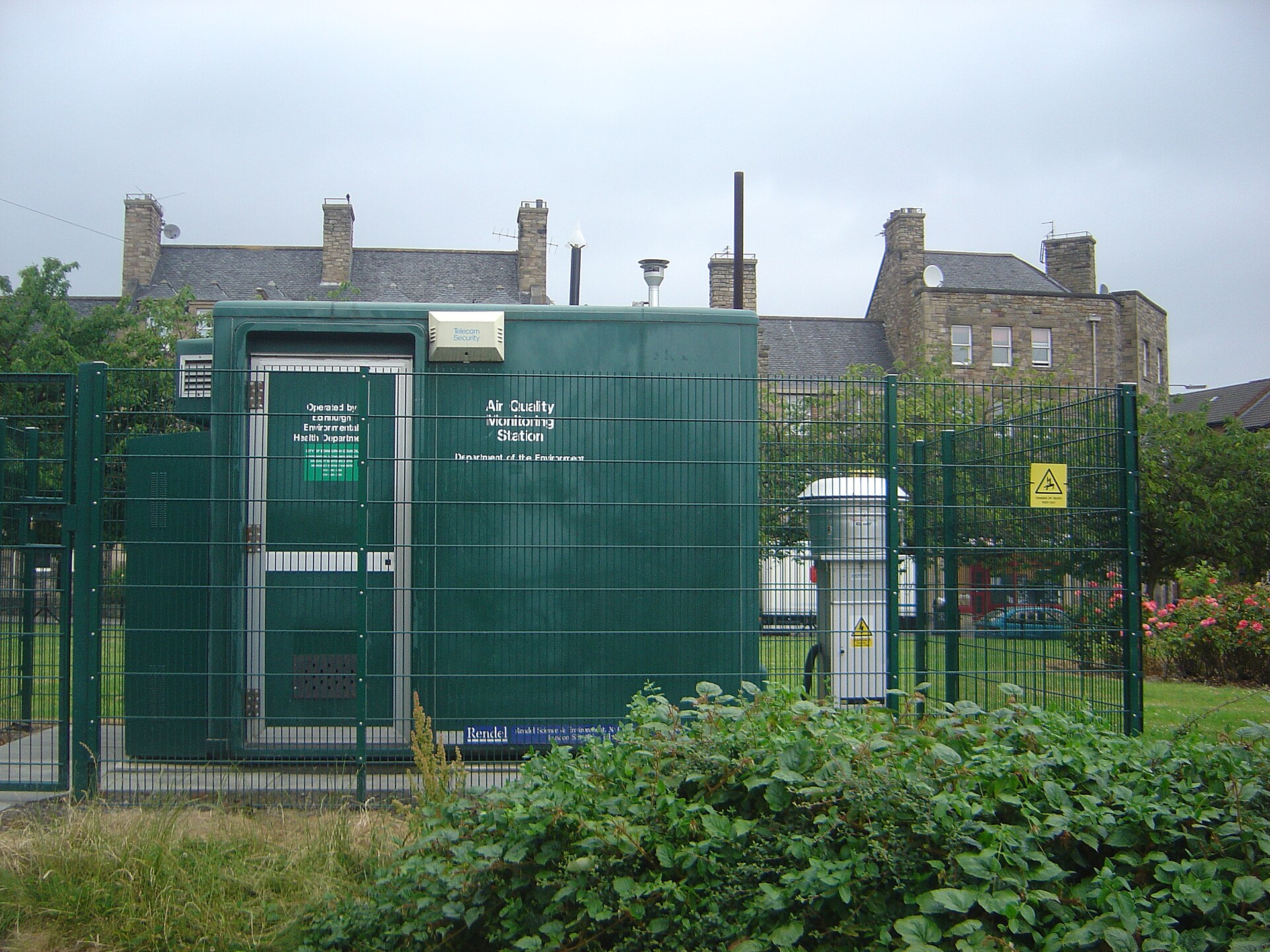

Air quality can begin with a small inlet on a monitoring cabinet, a sensor in a station, or a forecast model that estimates conditions where direct observations are limited. The public number that appears later is the last step in a longer chain.
Measurement starts with pollutants
Air pollution is not one substance. Measurement systems track pollutants such as fine particles, coarse particles, ozone, nitrogen dioxide, sulfur dioxide, and carbon monoxide. Each pollutant has its own units and behavior. PM2.5 and PM10 are particle measurements. Ozone and nitrogen dioxide describe gases. Weather, sunlight, traffic, industry, fires, and regional transport can all change the picture.
Ground data needs metadata
OpenAQ aggregates public air-quality data from sources across the world. Its API documentation emphasizes that data are shared in physical units rather than as an air quality index, and that near real-time and historical readings carry metadata for context. That metadata can include where a sensor is located, which parameter is measured, and which provider supplied the reading.
The same documentation also makes a boundary clear: OpenAQ does not represent all monitoring data in the world. It contains publicly available data that OpenAQ has discovered or received. For route planning, that means source coverage and freshness matter as much as the number itself.
Forecasts help when observations are limited
CAMS global atmospheric composition forecasts provide modeled atmospheric composition data. The dataset page describes global forecasts produced twice a day, with more than 50 chemical species, seven aerosol types, and meteorological variables. It also describes data assimilation, where current satellite observations are combined with a previous forecast to produce a globally complete estimate at the forecast start time.
Forecasts are useful because real monitoring coverage is uneven. A forecast can provide air-quality context where direct observations are sparse, delayed, or incomplete. It remains a model, so freshness labels and source labels should stay visible.
Assessment turns concentrations into AQI
Assessment is the interpretation layer. The EPA AQI technical guidance describes pollutant-specific breakpoints and reporting practices that convert concentrations into index values and categories. In AQI reporting, the critical pollutant is the pollutant with the highest AQI value for the reporting period.
This is why two places with different pollutant mixtures can have similar AQI values, and why two places with the same PM2.5 reading may not tell the full story if ozone or another pollutant is driving concern nearby.
Source analysis explains where pollution comes from
Air-quality assessment can also ask where pollution originated. A 2024 Environment International study of Southeast Asia examined source emission contributions to particulate matter and ozone, including local sectors and transboundary air pollution. That kind of analysis sits upstream of daily route planning, but it explains why air pollution can be local on one day and regional on another.
What a route-planning app can responsibly show
A route-planning app can compare estimated AQI, source type, freshness, forecast fallback, distance, and timing. It cannot turn a station or forecast into a personal exposure measurement. The useful product pattern is transparency: show whether context is recent, forecast, cached, or limited, then keep the recommendation framed as planning guidance.
Sources
- OpenAQ API overview: public air-quality data, physical units, near real-time and historical readings, and metadata context.
- OpenAQ Terms of Use and OpenAQ Licenses: authorized access and source licence context.
- CAMS global atmospheric composition forecasts and dataset DOI: forecast variables, update frequency, data assimilation, licence, and citation support.
- Atmosphere Data Store Terms of Use and Copernicus copyright and licences: licence and no-endorsement boundaries.
- EPA Technical Assistance Document for AQI reporting: concentration-to-index breakpoints and critical pollutant context.
- Environment International Southeast Asia source contribution study: source-emission and transboundary pollution assessment context.
Keep source context beside each route
Air Quality Router labels estimated AQI, freshness, recent readings, forecast fallback, and route timing together. Download Air Quality Router on the Apple App Store to compare walking and jogging plans with air-quality context in view.
Download on the Apple App StoreAir Quality Router is an informational planning tool, not medical advice. Personal health decisions belong with qualified care guidance.